

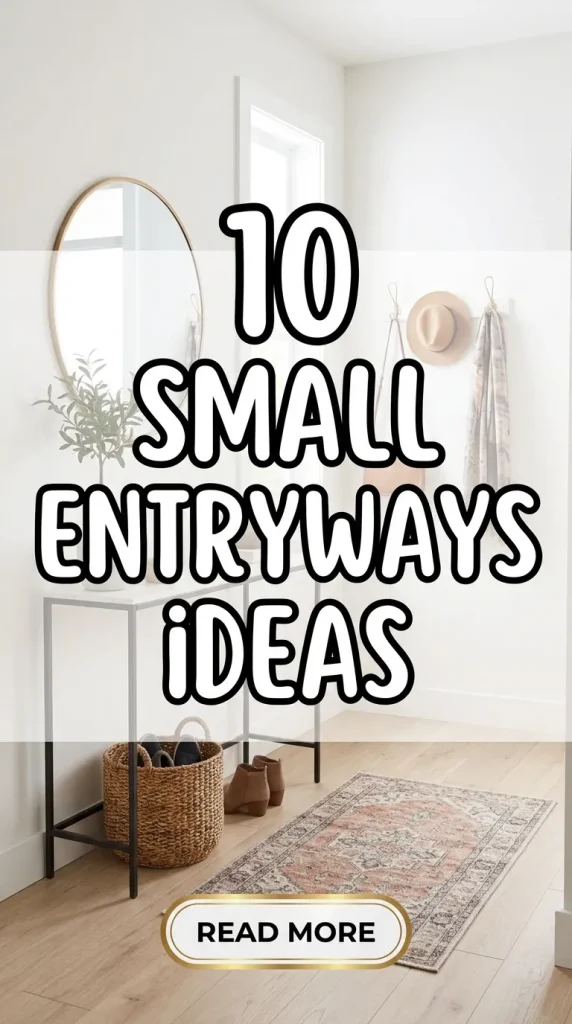
Small entryways often feel overlooked in home design, yet they serve one of the most important purposes in a household. They welcome guests, set the tone for the rest of the interior, and function as the primary transition area for everyday comings and goings. However, limited square footage can make designing an entryway challenging. Clutter builds up easily, storage becomes tricky, and decorative opportunities appear restricted. The key to transforming a small entryway lies in maximizing every inch, using smart organization techniques, incorporating visual tricks to expand the space, and choosing decor that adds personality without overwhelming the area.
The following detailed exploration dives into ten thoughtfully designed small entryway ideas. Each idea focuses on space efficiency, aesthetic cohesion, and functional brilliance. Rather than treating a small entryway as a limitation, these ideas embrace minimalism, practicality, and creativity, ultimately proving that even the smallest entry can be both beautiful and purposeful.
1. Floating Shelves for Minimalist Storage
Floating shelves are one of the most effective tools for enhancing storage in a small entryway without taking up valuable floor space. Their clean, streamlined appearance provides storage and display opportunities while maintaining an open feel.
One floating shelf placed at waist level can serve as a convenient landing spot for keys, wallets, mail, and sunglasses. Adding a second shelf higher above offers space for decorative items like small plants, artwork, or candles. Floating shelves can be made of wood, metal, marble, or painted finishes, allowing them to complement any style, whether rustic, modern, Scandinavian, or industrial.
The beauty of floating shelves lies in their versatility. They can be arranged horizontally, stacked vertically, or offset to create visual interest. Corner floating shelves are especially useful in awkward or tight spaces. They avoid bulky furniture pieces that could block pathways and instead provide functional storage disguised as a design element.
Pairing a floating shelf with a slim mirror above can transform the entry into an elegant yet practical nook. This setup makes the space feel larger while giving homeowners a place to prepare before heading out the door. Beneath the shelf, a small basket or hooks can hold scarves, quick-grab accessories, or reusable shopping bags.
Floating shelves offer a minimalist approach to small entryway storage, proving that functionality and style can coexist beautifully even in tight quarters.

2. Slim Console Tables for Narrow Spaces
Slim console tables are ideal for small entryways because they offer surface space without occupying too much floor area. Their narrow depth makes them suitable for hallways and tight foyers where a full-size table would be too large.
A console table can serve multiple purposes. It can be a catchall surface, a decorative platform, or even a mini workstation depending on the household’s needs. Many slim console tables come with shelves or drawers, adding extra storage for items that need to stay out of sight. For extremely small entryways, consider wall-mounted console tables or drop-down versions that fold when not in use.
Choosing a table with slender legs, open bases, or glass tops helps maintain an airy visual effect, preventing the space from feeling crowded. Metal-framed console tables bring an industrial touch, while wooden ones add warmth, and painted versions contribute a pop of color or personality.
Styling a slim console table thoughtfully creates impact without clutter. A small lamp adds soft illumination in the evenings. A single decorative bowl can function as storage. A framed photo or petite plant adds character. The key is restraint. Too many objects can overwhelm the small entryway, so aim for balance, simplicity, and coherence.
Slim console tables elevate narrow entryways by blending utility with aesthetics, allowing even the tightest spaces to feel intentional and well-designed.

3. Hooks and Peg Rails for Efficient Vertical Storage
Hooks are among the simplest yet most effective entryway solutions, especially for small spaces. They offer instant accessibility and prevent clutter from accumulating on surfaces. Peg rails, often associated with Scandinavian and Shaker design, extend this concept by providing a continuous row of hooks mounted on a wooden rail, allowing storage to stretch across the wall.
This vertical storage technique maximizes unused wall space, keeping bags, hats, coats, and accessories organized and within easy reach. Peg rails can even hold decorative items like hanging plants, woven baskets, or lightweight artwork. Their linear form introduces a clean, architectural element that suits both modern and traditional interiors.
For small households or minimalist environments, a few stylish metal or wooden hooks may suffice. For larger families, peg rails offer more capacity and can be installed at varying heights to accommodate children. Beneath hooks or peg rails, a bench can be added to extend functionality. This pairing creates a unified and visually appealing entryway moment that works even in narrow corridors.
Hooks and peg rails are cost-effective, customizable, and easy to install, making them an ideal choice for renters and homeowners seeking functional small entryway solutions.

4. Multi-Functional Benches With Hidden Storage
Benches with built-in storage combine seating and organization, making them particularly useful for small entryways where space is limited. They solve two common entryway problems: the need for a place to sit while putting on or removing shoes, and the need for hidden storage to reduce visual clutter.
Storage benches come in various forms. Some have lift-up tops, offering deep compartments for shoes, bags, or seasonal items. Others feature built-in cubbies for baskets. Some include drawers that keep the entryway looking tidy while offering quick access to everyday essentials.
The material and style of the bench can influence the atmosphere of the entryway. A wooden bench adds warmth and rustic charm, while an upholstered version introduces softness and comfort. Metal-framed benches bring an industrial feel, and minimalist benches with clean lines suit contemporary homes.
Placing a cushion or throw on the bench can soften the look, but avoid adding too many accessories that may turn into clutter. A simple cushion or neatly folded fabric item is enough to enhance comfort and aesthetics.
Multi-functional benches maximize the role of a small entryway, turning it into an organized, welcoming space that prioritizes both practicality and visual appeal.

5. Mirrors to Expand Visual Space
Mirrors are essential tools for small entryways because they visually double the space, reflect natural and artificial light, and create a sense of openness. A mirror is both functional and decorative, making it one of the most powerful design elements in a compact foyer.
There are several ways to use mirrors strategically. A large wall-mounted mirror immediately expands the area, making narrow entryways feel wider. An oversized round mirror introduces softness and serves as a beautiful focal point. Tall rectangular mirrors elongate the vertical dimension of the space, drawing the eye upward.
Mirrored panels or mirrored consoles add subtle reflective layers without overpowering the space. For small, dark entryways, positioning a mirror across from a window ensures enhanced brightness. Even placing a mirror behind a lamp on a console table multiplies the lighting effect, creating a welcoming glow.
The frame of the mirror can add character. Wooden frames evoke warmth, metallic frames introduce elegance, and black frames provide contemporary contrast. For extremely tight spaces, frameless mirrors blend seamlessly into the wall for a minimalist look.
Mirrors make small entryways feel more open, airy, and inviting, proving that strategic design choices can completely transform spatial perception.

6. Vertical Shoe Storage to Maximize Limited Floor Space
Shoes are one of the biggest contributors to entryway clutter. In small entryways, floor space is precious, so using vertical solutions helps maintain organization. Tall shoe cabinets, wall-mounted racks, and slim vertical shelves offer effective storage without blocking movement.
Vertical shoe cabinets are particularly useful because they hide shoes behind closed doors, creating a clean aesthetic. Many come in narrow designs specifically intended for tight spaces. Wall-mounted racks work well for frequently used shoes, keeping them accessible but off the floor. Floating shoe shelves arranged vertically contribute to a modern, airy look.
For creative approaches, ladder-style racks or modular stacking systems can be incorporated. Shoe storage does not need to be limited to traditional containers. Baskets on floating shelves, hanging organizers, and built-in niches can be equally effective.
Keeping footwear organized enhances the entryway’s appearance while improving daily efficiency. By storing shoes vertically, homeowners maintain a tidy, spacious feel without sacrificing accessibility in small areas.

7. Light Color Palettes to Brighten and Enlarge the Entryway
Color plays a significant role in shaping how we perceive space. In small entryways, lighter shades can dramatically increase the sense of openness and cleanliness. Whites, creams, soft grays, muted greens, pale blues, and other gentle neutrals reflect light and visually expand tight areas.
Painting the walls in a light tone sets a bright, welcoming backdrop while allowing furniture and decor to stand out subtly. The trim and ceiling can also be painted in light shades to create a seamless, continuous visual flow. If the walls and ceiling are the same color, the boundaries blur, making the space appear taller and more spacious.
Flooring also influences the overall atmosphere. Light-toned wood, tiles, or laminate add warmth while maintaining brightness. Rugs in pale hues or simple patterns help define the entryway without overwhelming it.
Light color palettes complement small entryways because they reduce visual weight. Instead of absorbing light, soft colors reflect it, creating a calm, airy environment perfect for small, enclosed entry spaces.

8. Compact Wall-Mounted Lighting to Enhance Ambiance
Lighting is essential in a small entryway because it sets the tone for the home and contributes to the visual size of the space. Wall-mounted lighting is particularly useful because it saves floor and surface space while providing illumination at optimal heights.
Sconces are elegant choices that flank mirrors or frame consoles. Their soft, diffused light creates a warm, welcoming environment. Minimalist sconces with slim profiles work well in narrow corridors, while decorative sconces add personality. Adjustable wall lamps offer flexibility by allowing homeowners to direct light precisely where needed.
For extremely small entryways, consider integrated LED lighting beneath floating shelves or within wall-mounted cabinetry. These subtle lighting elements brighten dark corners without adding visual clutter. Another option is installing a wall-mounted lamp with a swing arm to provide adjustable lighting that takes up almost no space.
Light color temperature influences mood. Warm light creates a cozy feel, while cool light feels modern and crisp. The key is balance. Entryways should not be too dim or overly bright. Layered lighting, even in small amounts, enhances dimension and comfort.
Compact wall-mounted lighting elevates small entryways by combining functionality, elegance, and space efficiency.

9. Simple Wall Art to Add Personality Without Clutter
Artwork brings character to an entryway, but in small spaces, the challenge lies in adding personality without overcrowding the area. The key is intentional curation.
One impactful piece of art can become a focal point. A large framed print above a console table adds sophistication, while a simple abstract piece introduces modern elegance. Photography can enhance narrative quality, giving the entryway a sense of depth and meaning.
For homeowners who enjoy variety, a small gallery wall can be created using petite frames arranged in a grid or staggered pattern. This approach works well above benches, slim tables, or along narrow hallways leading into the home. The frames should remain cohesive in style or color to avoid visual clutter.
Materials matter as well. Wooden frames add warmth, black frames add structure, and metallic frames contribute a refined touch. Artwork does not need to be bold or overly colorful. Neutral art pieces with simple forms often complement small entryways more effectively.
Art humanizes the entryway and sets the emotional atmosphere of the home. When chosen with care, it enhances the space without overwhelming it.

10. Built-In Niches and Custom Cabinetry for Ultimate Space Optimization
Built-in solutions maximize every inch of a small entryway, creating customized storage and design features tailored precisely to the home’s dimensions. While more involved, these solutions offer unmatched efficiency and can dramatically transform a compact space.
A built-in niche for shoes, bags, or coats keeps items neatly contained. Wall recesses can hold small shelves, decorative objects, or lighting fixtures. Custom cabinets can be designed to fit narrow walls, awkward corners, or unused recesses near the doorway.
Floor-to-ceiling cabinets offer maximum storage, keeping the entryway clutter-free. These cabinets can hold seasonal items, outdoor gear, or cleaning supplies. Choosing cabinet doors with sleek, minimalist handles or push-to-open mechanisms ensures the entryway remains visually uncluttered.
Built-in benches offer seating and concealed storage, while built-in cubbies make organization simple. For extremely small spaces, sliding cabinet doors may be more practical than hinged ones.
With custom designs, homeowners can integrate the exact elements they need, from hooks to drawers to lighting. This approach turns a small entryway into a highly efficient command center that supports daily routines with ease.
