Rock painting may seem simple at first glance — a small stone, a brush, a bit of color — yet its emotional resonance runs deep. Stones are among the oldest materials humans have interacted with. They endure. They weather time. When we paint a rock, especially for Valentine’s Day, we are not just decorating an object; we are transforming something permanent into a message of feeling.
Valentine’s rock painting is uniquely intimate because it combines effort, patience, and intention. Unlike store-bought gifts, a painted rock carries the marks of the hand that made it. Brushstrokes are imperfect. Colors vary. These irregularities become part of the meaning. Love, after all, is rarely flawless — but it is lasting.
Historically, humans have marked stones to communicate, commemorate, and remember. From cave markings to boundary stones, rocks have long carried messages meant to outlive their creators. Painting a Valentine’s rock echoes this instinct. It says: this feeling matters enough to be set in something that lasts.
This essay explores ten Valentine’s rock painting ideas, each rooted in symbolism rather than trend. These ideas are not about artistic skill but about emotional clarity. Whether the rock is gifted, hidden, displayed, or kept privately, each concept offers a different way to express love through permanence, simplicity, and care.
1. The Classic Heart, Reimagined
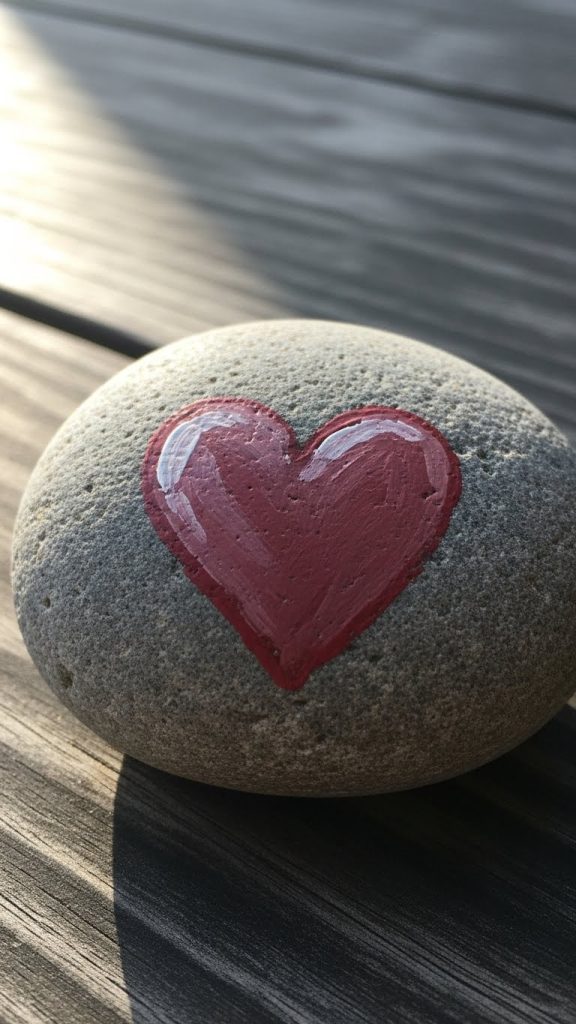
The heart is the most recognizable symbol of Valentine’s Day, yet its power lies in how it is interpreted. Painted on stone, the heart becomes grounded rather than decorative.
Instead of bright, cartoonish reds, this idea favors muted tones — deep crimson, dusty rose, or even matte black outlined softly in white. The stone’s natural texture remains visible beneath the paint, reminding the viewer that love exists alongside imperfection.
The heart may be centered or slightly off-balance, echoing the organic shape of the stone itself. No lettering is necessary. The symbol alone carries weight.
This rock represents love in its most distilled form — not exaggerated, not performative, but steady and present.