Valentine’s Day, long before it became saturated with commercial excess, was an intimate observance shaped by ritual, restraint, and symbolism. Romance was not loud. It was deliberate. It unfolded through handwritten letters, carefully chosen flowers, shared glances across candlelit rooms, and domestic spaces that reflected emotional intention rather than seasonal novelty.
Vintage Valentine’s décor belongs to an era when interiors were not rapidly refreshed but gently adapted. Homes absorbed romance the way they absorbed time — slowly, thoughtfully, and without urgency. Decorations were not disposable. Lace tablecloths were inherited. Porcelain figurines were displayed once a year and returned carefully to cabinets. Candlesticks carried the patina of decades.
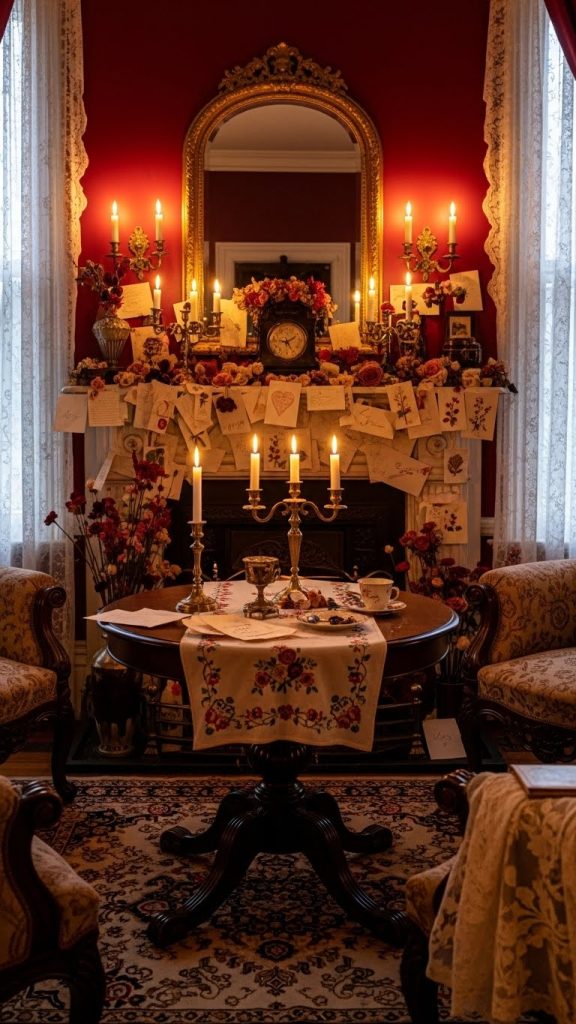
What defines vintage Valentine’s décor is not pink saturation or thematic excess, but atmosphere. It is an aesthetic of sentiment rather than spectacle. The colors are softened by age, the materials tactile and familiar, the mood reflective rather than performative. Romance is implied, not announced.
This essay explores ten distinct vintage Valentine’s décor traditions, each rooted in a different historical or cultural sensibility. These are not instructions for imitation, but atmospheres to be understood — ways romance once inhabited domestic space with quiet confidence.
1. Victorian Valentine Sentimentality
Victorian Valentine’s décor was rich with symbolism and emotional density. This was an era obsessed with coded messages, where flowers, colors, and objects carried layered meanings.
Rooms were dressed with heavy textiles: lace curtains, embroidered runners, velvet cushions. Deep reds, dusty roses, and antique creams dominated the palette. Fireplaces became focal points, adorned with garlands, handwritten notes, and framed silhouettes.
Decorative objects were intimate rather than grand. Lockets, miniature portraits, and pressed flowers appeared on mantels and side tables. Candles were essential, their soft glow enhancing the sense of secrecy and devotion.
This décor tradition reflects a time when romance was expressed indirectly. The room itself became a letter — layered, symbolic, and deeply personal.