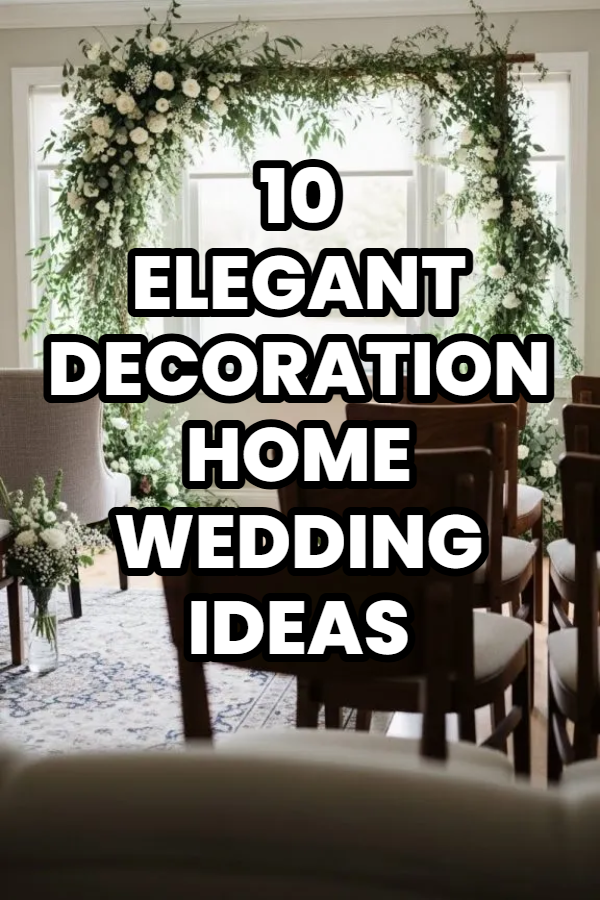
10 Decoration Home Wedding Ideas
A home wedding is not chosen for convenience alone. It is chosen for meaning. To marry at home is to invite love into the most personal space you have — the place where daily life unfolds, where memories already live, where walls have witnessed quiet moments long before vows are spoken. Because of this, home wedding decoration carries a unique emotional responsibility. It must honor the significance of the ceremony without overwhelming the intimacy of the space.
Historically, weddings often took place at home. Before banquet halls and destination venues, families gathered in living rooms, courtyards, gardens, and dining spaces. Decoration was modest but intentional. Objects already present in the home were elevated through placement, lighting, and symbolism. The transformation was emotional more than physical.
Modern home weddings continue this tradition. Their beauty lies not in scale, but in closeness. Guests are fewer, relationships are deeper, and the atmosphere is shaped by familiarity. Decoration in this context is not about spectacle; it is about reverence. It signals that an ordinary place has become extraordinary — not permanently, but meaningfully.
This essay explores ten home wedding decoration ideas designed to honor intimacy, comfort, and ceremony. These approaches respect the scale of a home while elevating it into a space worthy of commitment, promise, and shared memory.
1. Defining a Ceremony Space Within the Home
One of the most important decoration decisions for a home wedding is defining where the ceremony begins. Even in a familiar space, there must be a clear emotional boundary between everyday life and ritual.
This can be achieved through subtle architectural cues. An arch, fabric draping, floral framing, or a carefully arranged backdrop marks the ceremony area without requiring structural change. The goal is not to hide the home, but to focus attention.
Seating is arranged to face the couple, creating intentional orientation. Rugs or runners may be used to guide movement and visually anchor the space.
This decoration idea frames the ceremony as sacred — a moment carved gently out of the familiar.

2. Floral Decor That Enhances, Not Overpowers
In a home wedding, florals should feel like extensions of the space rather than external installations. The scale is intimate, so arrangements must be thoughtful.
Loose, organic florals placed at entryways, along staircases, on mantels, or near windows create softness and continuity. Rather than towering centerpieces, low arrangements encourage conversation and connection.
Flowers chosen may reflect the season or the home’s existing color palette, allowing them to blend naturally.
This approach frames florals as emotional accents — present, but not dominant.

3. Lighting That Transforms Mood Gently
Lighting is one of the most transformative elements in a home wedding. Because homes are designed for daily function, adjusting light is key to shifting atmosphere.
Overhead lighting is softened or minimized. Lamps, candles, string lights, and lanterns create layers of glow. Warm light temperatures enhance intimacy and calm.
As daylight fades, lighting transitions naturally into evening ambiance. Shadows soften edges. The home begins to feel enclosed and ceremonial.
This decoration idea frames light as emotion — guiding how the wedding is felt rather than how it is seen.

4. Using Existing Furniture as Decor
One of the most beautiful aspects of a home wedding is the furniture already present. Rather than removing it, thoughtful decoration elevates it.
Dining tables become gathering points. Sofas and chairs create lounge areas. Sideboards hold candles, photographs, or symbolic objects.
Linens, flowers, and lighting enhance what already exists. Nothing feels staged or temporary.
This approach frames the wedding as integrated into life — not separate from it.

5. A Home Wedding Table That Feels Ceremonial
Whether the meal is formal or casual, the table is central to a home wedding. It is where guests gather, eat, and share time.
Table décor focuses on warmth and intention. Linens add softness. Candles create glow. Florals remain low and conversational.
Place settings may include handwritten notes or small personal details. The table feels prepared, not decorated.
This idea frames the wedding as hospitality — love extended outward through care.

6. Personal Objects as Meaningful Decor
Homes are filled with objects that carry memory. In a home wedding, these objects become powerful decorative elements.
Photographs, heirlooms, books, art, or handmade items are placed intentionally throughout the space. Their meaning may be private or shared.
These items do not need explanation. Their presence adds emotional depth.
This decoration idea frames the wedding as a continuation of shared life rather than a departure from it.

7. Nature Integrated Into the Home Setting
Nature brings symbolism and calm to any wedding. In a home setting, it bridges the indoor and outdoor worlds.
Greenery, branches, flowers, and natural materials soften architectural lines. Windows are emphasized. Outdoor views become part of the décor.
If the wedding includes a garden, patio, or balcony, these spaces are gently connected through lighting and continuity of materials.
This approach frames the wedding as grounded — love situated within natural rhythm.

8. Minimalism That Honors Intimacy
Home weddings benefit greatly from restraint. Too much décor can overwhelm the space and disrupt flow.
Minimalist decoration focuses on what matters: light, texture, and presence. Negative space is preserved. Each element has purpose.
This allows emotion to remain central. Guests feel comfortable and at ease.
This idea frames the wedding as sincere — nothing added for appearance alone.

9. Creating Flow Between Rooms
Unlike venues, homes consist of multiple rooms. Decoration should guide guests naturally through the space.
Lighting, color continuity, and repeated materials create cohesion. Each room feels connected rather than isolated.
Transition spaces — hallways, staircases, doorways — are decorated lightly to guide movement and maintain atmosphere.
This approach frames the wedding as a journey through shared space and shared life.

10. Letting the Home Remain a Home
The most important home wedding decoration idea is preservation of authenticity. The home should not disappear beneath décor.
Comfort matters. Familiarity matters. Guests should feel welcomed rather than impressed.
After the wedding, the home will return to daily life — but it will carry memory. The goal is transformation without erasure.
This approach frames the wedding as belonging — love celebrated where it already lives.

Conclusion: When a House Becomes a Witness
A home wedding is not about creating something new from scratch. It is about revealing what already exists — warmth, history, connection.
Decoration in this context is an act of respect. It honors the space that has held life before the wedding and will continue to hold it afterward. It does not overwhelm; it listens.
When done with intention, home wedding décor turns ordinary rooms into witnesses. Walls hold vows. Tables remember laughter. Light settles into corners where promises were made.
In the end, the most beautiful home wedding decorations are not the ones guests photograph most, but the ones the couple remembers — because they felt like home, only deeper.