Luxury in bedroom design has evolved. Once defined by ornament, opulence, and display, it is now measured by something far more subtle: how a space feels when the door closes. A truly luxurious bedroom is not loud. It does not perform. It supports rest, privacy, and emotional well-being through restraint, quality, and thoughtful composition.
Modern luxury bedrooms prioritize experience over appearance. They are designed for silence rather than spectacle, comfort rather than admiration. Every decision — from lighting temperature to fabric choice — contributes to an atmosphere of calm control. Nothing is accidental, yet nothing feels forced.
Historically, bedrooms were among the most protected rooms in a home. Heavy doors, thick fabrics, and enclosed layouts ensured warmth and safety. Today’s luxury bedrooms reinterpret this sense of protection through spatial clarity, tactile richness, and intentional minimalism. They are not crowded with objects; they are layered with meaning.
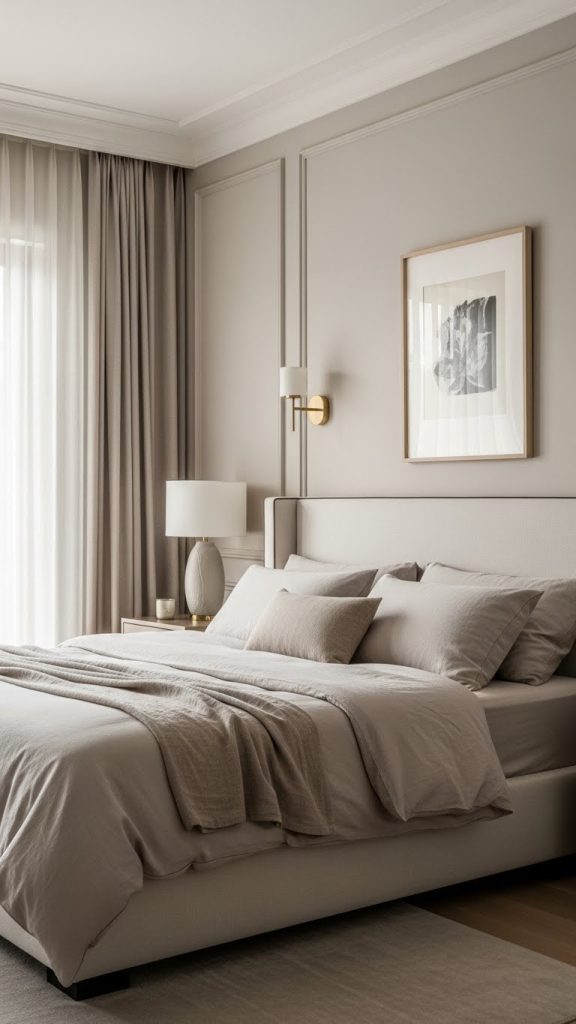
Luxury is also deeply personal. A luxury bedroom is not defined by price or trend, but by coherence — how well materials, light, proportions, and silence work together to create rest. When done well, luxury is felt immediately and remembered long after.
This essay explores ten luxury bedroom interior design ideas rooted in these principles. Each idea focuses on how luxury functions, not how it announces itself. These are timeless concepts designed to elevate the bedroom into a sanctuary rather than a showroom.
1. A Harmonized Neutral Color Language
Luxury bedrooms rarely rely on bold color contrasts. Instead, they use tonal harmony — a layered palette of closely related hues that creates depth without disturbance.
Soft ivories, warm taupes, muted greys, sand tones, and stone-inspired shades form the foundation. Rather than one dominant color, luxury emerges through subtle variation. Walls, ceilings, textiles, and furniture speak the same visual language in different dialects.
This approach allows the eye to rest. It removes visual noise and creates continuity across surfaces. Accent colors, if present, appear quietly — in undertones, textures, or finishes rather than bold statements.
The result is a bedroom that feels composed and timeless, unaffected by trends and deeply calming.