10 Valentines Vintage Decor

Valentine’s Day, long before it became saturated with commercial excess, was an intimate observance shaped by ritual, restraint, and symbolism. Romance was not loud. It was deliberate. It unfolded through handwritten letters, carefully chosen flowers, shared glances across candlelit rooms, and domestic spaces that reflected emotional intention rather than seasonal novelty.

Vintage Valentine’s décor belongs to an era when interiors were not rapidly refreshed but gently adapted. Homes absorbed romance the way they absorbed time — slowly, thoughtfully, and without urgency. Decorations were not disposable. Lace tablecloths were inherited. Porcelain figurines were displayed once a year and returned carefully to cabinets. Candlesticks carried the patina of decades.
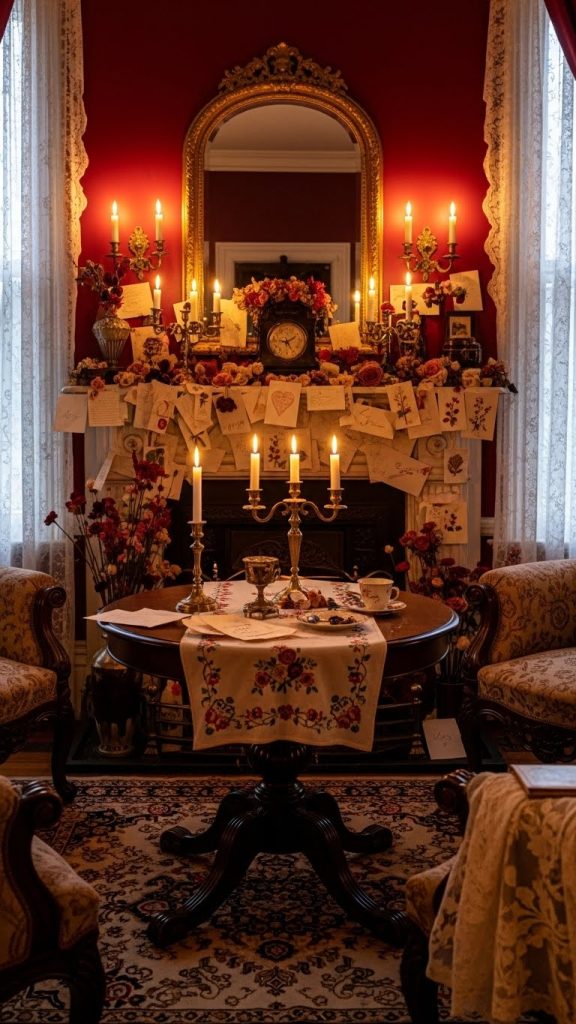
What defines vintage Valentine’s décor is not pink saturation or thematic excess, but atmosphere. It is an aesthetic of sentiment rather than spectacle. The colors are softened by age, the materials tactile and familiar, the mood reflective rather than performative. Romance is implied, not announced.

This essay explores ten distinct vintage Valentine’s décor traditions, each rooted in a different historical or cultural sensibility. These are not instructions for imitation, but atmospheres to be understood — ways romance once inhabited domestic space with quiet confidence.

1. Victorian Valentine Sentimentality

Victorian Valentine’s décor was rich with symbolism and emotional density. This was an era obsessed with coded messages, where flowers, colors, and objects carried layered meanings.

Rooms were dressed with heavy textiles: lace curtains, embroidered runners, velvet cushions. Deep reds, dusty roses, and antique creams dominated the palette. Fireplaces became focal points, adorned with garlands, handwritten notes, and framed silhouettes.

Decorative objects were intimate rather than grand. Lockets, miniature portraits, and pressed flowers appeared on mantels and side tables. Candles were essential, their soft glow enhancing the sense of secrecy and devotion.

This décor tradition reflects a time when romance was expressed indirectly. The room itself became a letter — layered, symbolic, and deeply personal.


2. Edwardian Soft Romance and Lightness

Edwardian Valentine’s décor softened Victorian intensity. Where the Victorian home leaned toward drama and density, Edwardian interiors favored light, air, and elegance.

Color palettes shifted toward pale pinks, creams, and faded florals. Sheer fabrics replaced heavy drapery. Furniture was lighter in form, often painted or upholstered in delicate patterns.

Floral arrangements were central, especially roses and lilies displayed in porcelain vases. Decorative china, handwritten cards, and ribbon accents appeared throughout the sitting room and dining areas.

This aesthetic reflects romance as gentility rather than obsession — a quiet optimism that celebrated affection without emotional weight.


3. French Belle Époque Valentine Elegance

In Belle Époque France, Valentine’s décor leaned toward cultivated sensuality. Romance was intellectual, artistic, and intertwined with beauty.

Interiors featured carved furniture, gilded mirrors, and soft pastel walls. Fabrics such as silk and linen introduced subtle sheen. Candles and shaded lamps created a warm, flattering glow.

Decorative elements included handwritten poetry, small sculptures, and floral arrangements arranged with restraint. The emphasis was not on abundance, but on composition.

This décor tradition suggests romance as refinement — a shared appreciation for beauty, art, and conversation.


4. Early 20th-Century American Parlor Romance

American Valentine’s décor in the early 1900s reflected domestic optimism and sentimentality. Parlors became spaces of display, where romance was expressed through carefully arranged objects.

Paper Valentines, framed photographs, and floral motifs appeared on side tables and mantels. Doilies, lace runners, and decorative pillows softened furniture.

Colors remained muted but warm: blush, cream, burgundy. The room felt welcoming and earnest, designed to host conversation and modest celebration.

This tradition captures romance as sincerity — less theatrical, more heartfelt.


5. Art Nouveau Romantic Naturalism

Art Nouveau Valentine’s décor drew heavily from nature and organic form. Romance was expressed through curves, florals, and flowing lines.

Decorative motifs featured vines, blossoms, and feminine silhouettes. Furniture and objects emphasized craftsmanship and artistry. Stained glass, ceramic vases, and botanical prints played central roles.

Colors were earthy yet romantic: sage green, rose, amber. Light filtered through decorative elements, casting gentle patterns across walls.

This aesthetic presents romance as harmony — between humans, nature, and art.


6. 1920s Vintage Valentine Glamour (Subdued)

While the 1920s are often associated with excess, Valentine’s décor in refined homes remained controlled. Glamour was present, but softened.

Decor featured metallic accents, mirrored trays, crystal glassware, and structured floral arrangements. Colors included champagne, blush, and muted gold.

Lighting was low and atmospheric. Candles and lamps reflected softly off polished surfaces. Decorative elements were minimal but intentional.

This tradition reflects romance as sophistication — modern yet measured, celebratory without excess.


7. Mid-Century Valentine Nostalgia (1940s–1950s)

Mid-century Valentine’s décor leaned into nostalgia and domestic warmth. After years of uncertainty, romance returned to the home in comforting, familiar forms.

Decorations included heart-shaped motifs, soft textiles, and handmade elements. Colors were gentle and cheerful: dusty pink, buttercream, soft red.

Dining tables featured simple centerpieces and handwritten place cards. Living spaces felt cozy and lived-in.

This aesthetic reflects romance as reassurance — a quiet affirmation of connection and stability.


8. Cottagecore Precursor: Rural European Valentine Traditions

In rural European homes, Valentine’s décor was understated and rooted in practicality. Romance appeared through natural materials and seasonal gestures.

Fresh flowers, woven baskets, embroidered linens, and candles defined the space. Colors were drawn from nature: faded red, linen white, moss green.

Decorations were often handmade or reused annually. Nothing felt disposable.

This tradition reflects romance as continuity — woven into daily life rather than isolated as an event.


9. Catholic Continental Valentine Symbolism

In Catholic-influenced households, Valentine’s décor often incorporated subtle religious symbolism. Romance was intertwined with devotion and ritual.

Sacred imagery, candles, and floral offerings appeared alongside romantic elements. Colors were rich but subdued: burgundy, gold, cream.

The atmosphere was reverent rather than playful. Love was framed as enduring, sanctified, and solemn.

This tradition presents romance as commitment rather than spectacle.


10. The Heirloom Valentine Interior

The final vintage Valentine aesthetic is not tied to a single era, but to inheritance. These homes celebrate romance through objects passed down through generations.

Heirloom china, antique candlesticks, embroidered linens, and aged photographs appear briefly each year. Decorations are minimal but emotionally dense.

The room feels layered with memory. Romance here is not about novelty, but about continuity — love that survives time.


Conclusion: Romance That Lingers

Vintage Valentine’s décor reminds us that romance does not require excess. It thrives in intention, in atmosphere, and in memory. These interiors were not designed to impress an audience, but to honor a feeling.

In embracing vintage traditions, we return to a slower understanding of love — one that values patience, symbolism, and presence. The most beautiful Valentine’s rooms are not the most decorated, but the most considered.

Romance, like good décor, endures when it is allowed to age.

Similar Posts

  • 10 Bedroom Design Elegant Classy

    Elegance is often misunderstood. It is mistaken for luxury, confused with opulence, or reduced to decorative excess. True elegance, however, is far more restrained. It is about balance rather than abundance, harmony rather than attention, and intention rather than display. Nowhere is this distinction more important than in the bedroom. A bedroom is an intimate…

  • 10 Decoration For Wedding

    A wedding is not simply an event; it is a ritual. It marks the transition from one chapter of life into another, witnessed by community, family, and memory. Decoration, in this context, is not superficial. It is the visual language through which emotion, intention, and identity are expressed. Every fabric, light source, and object placed…

  • 10 Coffee Table Decor Ideas

    The coffee table is often the centerpiece of a living room, offering both functional and aesthetic value. Beyond its practical use for holding drinks, books, or remote controls, a well-styled coffee table can transform the feel of a space, reflecting personality, style, and the overall mood of the room. Thoughtful coffee table decor blends functionality…

  • 10 Family Photo Outfit Ideas for Indoor Studio

    Family photos are timeless keepsakes that capture the love, connection, and personality of the people who matter most. When planning an indoor studio session, one of the most important elements is selecting outfits that complement both the family members and the studio environment. Unlike outdoor shoots, indoor studio sessions allow full control of lighting, background,…

  • 10 DIY Kawaii Paper Doll Crafts

    Paper dolls have been loved for generations, but when combined with the kawaii aesthetic, they become even more charming, playful, and creative. Kawaii paper dolls are not just toys or decorations—they are a form of storytelling, imagination, and artistic expression. Rooted in Japanese kawaii culture, these paper dolls feature soft colors, rounded shapes, sweet facial…

  • 10 Sofa Bed Ideas for Small Spaces

    Living in a small space does not mean sacrificing comfort, functionality, or style. In fact, compact homes often inspire the most thoughtful design solutions. One of the most valuable pieces of furniture in small apartments, studios, guest rooms, and multipurpose homes is the sofa bed. When chosen carefully, a sofa bed allows a single space…