10 Bedroom Interior Design Luxury

Luxury in bedroom design has evolved. Once defined by ornament, opulence, and display, it is now measured by something far more subtle: how a space feels when the door closes. A truly luxurious bedroom is not loud. It does not perform. It supports rest, privacy, and emotional well-being through restraint, quality, and thoughtful composition.
Modern luxury bedrooms prioritize experience over appearance. They are designed for silence rather than spectacle, comfort rather than admiration. Every decision — from lighting temperature to fabric choice — contributes to an atmosphere of calm control. Nothing is accidental, yet nothing feels forced.
Historically, bedrooms were among the most protected rooms in a home. Heavy doors, thick fabrics, and enclosed layouts ensured warmth and safety. Today’s luxury bedrooms reinterpret this sense of protection through spatial clarity, tactile richness, and intentional minimalism. They are not crowded with objects; they are layered with meaning.
Luxury is also deeply personal. A luxury bedroom is not defined by price or trend, but by coherence — how well materials, light, proportions, and silence work together to create rest. When done well, luxury is felt immediately and remembered long after.
This essay explores ten luxury bedroom interior design ideas rooted in these principles. Each idea focuses on how luxury functions, not how it announces itself. These are timeless concepts designed to elevate the bedroom into a sanctuary rather than a showroom.
1. A Harmonized Neutral Color Language
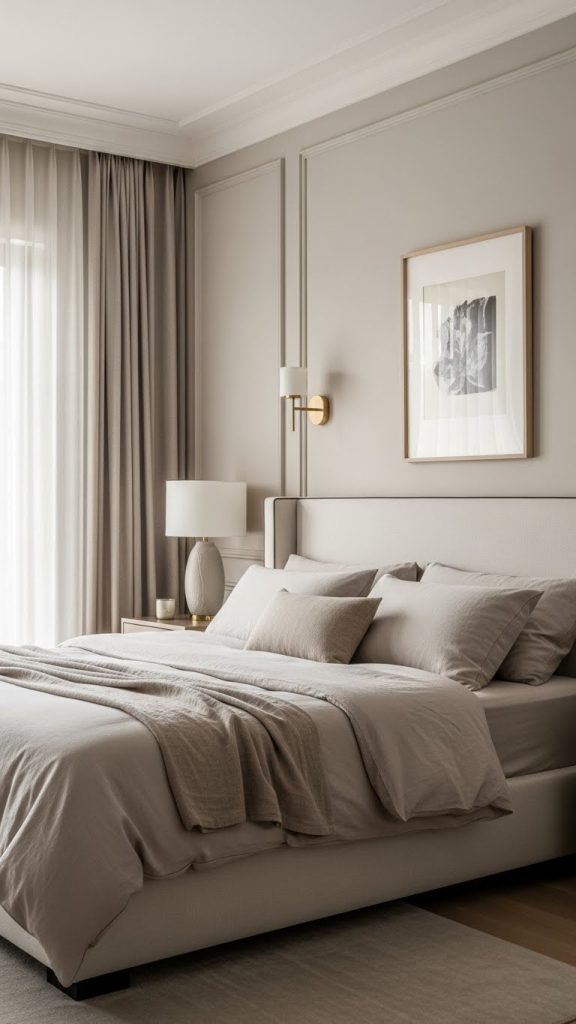
Luxury bedrooms rarely rely on bold color contrasts. Instead, they use tonal harmony — a layered palette of closely related hues that creates depth without disturbance.
Soft ivories, warm taupes, muted greys, sand tones, and stone-inspired shades form the foundation. Rather than one dominant color, luxury emerges through subtle variation. Walls, ceilings, textiles, and furniture speak the same visual language in different dialects.
This approach allows the eye to rest. It removes visual noise and creates continuity across surfaces. Accent colors, if present, appear quietly — in undertones, textures, or finishes rather than bold statements.
The result is a bedroom that feels composed and timeless, unaffected by trends and deeply calming.
2. The Bed as the Architectural Centerpiece
In luxury bedroom design, the bed is not an accessory — it is architecture. It anchors the room physically and emotionally.
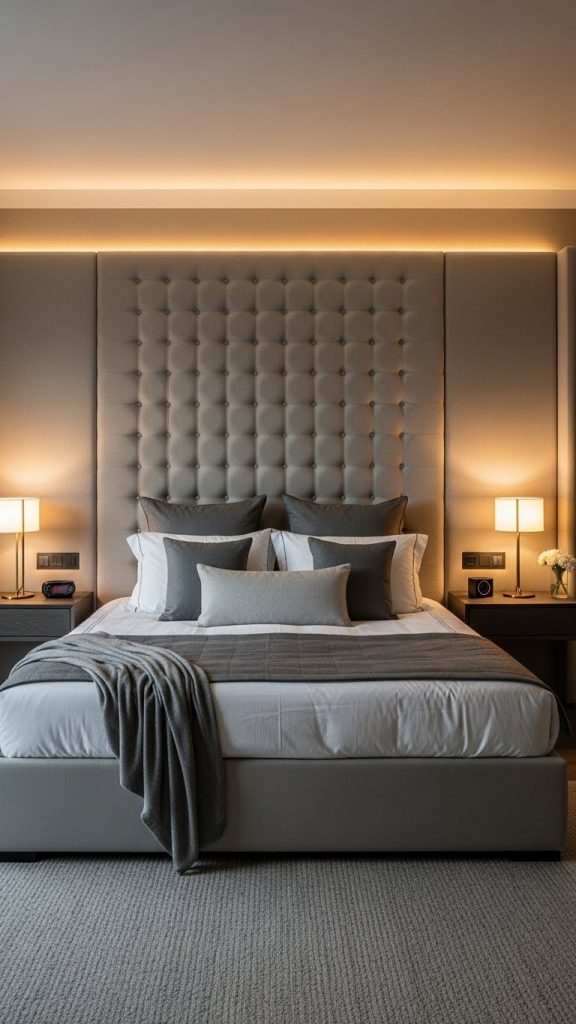
Statement beds often feature oversized upholstered headboards, extended wall panels, or integrated backdrops that define the sleeping zone. These elements create enclosure without heaviness.
Scale is essential. A luxury bed should feel generous, but never overpowering. Upholstery materials such as linen, velvet, or premium woven fabrics add tactile softness, while clean lines maintain modern elegance.
The bed’s presence is confident, not decorative. It grounds the space and gives everything else permission to be quiet.
3. High-End Textiles That Prioritize Touch
Luxury is felt through the skin before it is seen. In bedrooms, textiles are therefore one of the most critical design elements.
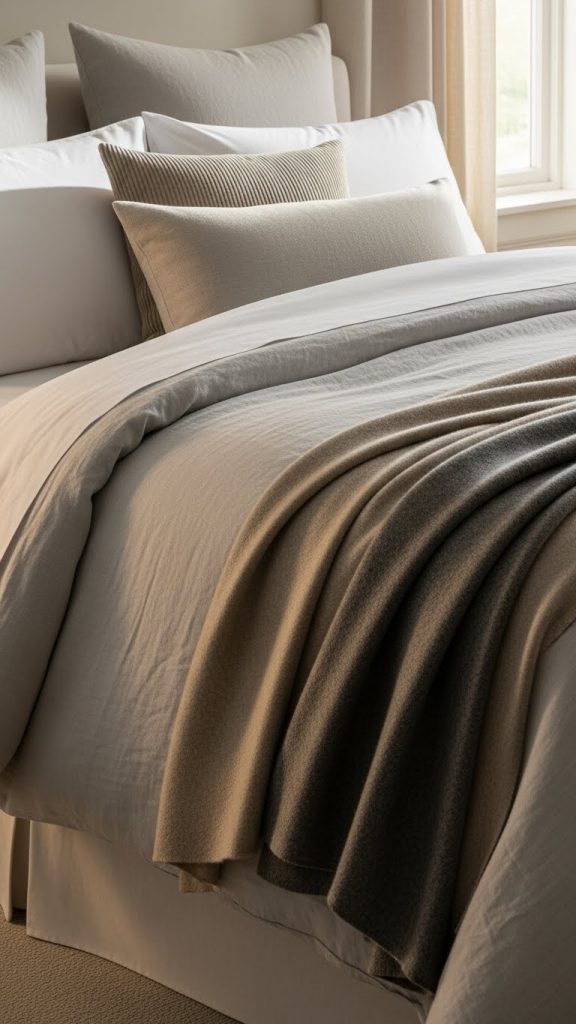
High-thread-count cotton sheets, washed linen duvets, wool or cashmere throws, and silk accents create a tactile hierarchy. Each layer has a purpose and a distinct feel.
Rather than excessive layering, luxury bedrooms favor precision. Fewer textiles, chosen exceptionally well, create a sense of ease. Bedding appears relaxed yet intentional, inviting rather than styled.
Texture replaces pattern. Contrast comes from material interaction rather than color or decoration.
4. Lighting Designed as Atmosphere
Lighting defines luxury more than any object. Poor lighting can undo even the most expensive interior.
Luxury bedrooms use layered lighting: ambient lighting for overall glow, task lighting for function, and accent lighting to reveal texture and depth. Overhead lights are softened or concealed. Warm color temperatures dominate.
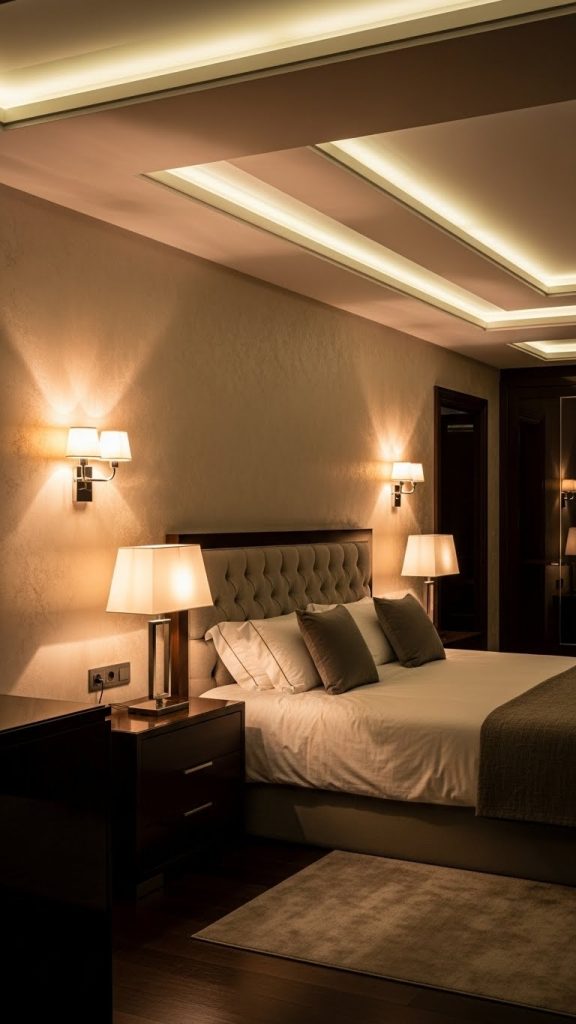
Wall sconces, bedside lamps, and indirect lighting create intimacy. Light sources are placed thoughtfully to flatter skin tones and eliminate harsh shadows.
In a luxury bedroom, lighting is never decorative for its own sake. It is architectural, emotional, and deeply intentional.
5. Furniture Chosen for Proportion, Not Quantity
Luxury does not mean more furniture. It means the right furniture.
Every piece in a luxury bedroom serves a purpose and holds visual weight. Nightstands align perfectly with the bed. Benches at the foot of the bed provide balance and function. Chairs or loungers, if included, are sculptural but comfortable.
Negative space is preserved. Walkways are clear. Furniture placement respects breathing room and movement.
This restraint communicates confidence. The room feels complete without being filled.
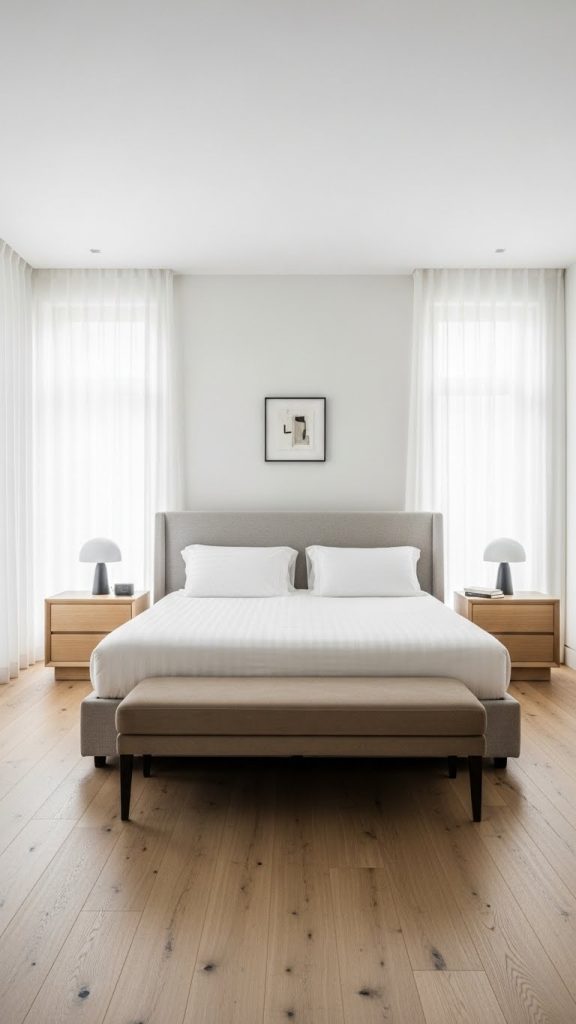
6. Natural Materials Used With Discipline
Natural materials are central to luxury bedroom interiors, but their use must be disciplined.
Wood, stone, plaster, linen, leather, wool, and ceramic appear throughout the space. Finishes are matte or softly honed rather than glossy. Grain, texture, and imperfection are embraced subtly.
These materials age gracefully, developing character rather than deteriorating. They connect the bedroom to the physical world, grounding it emotionally.
Luxury here is not perfection — it is authenticity elevated through refinement.
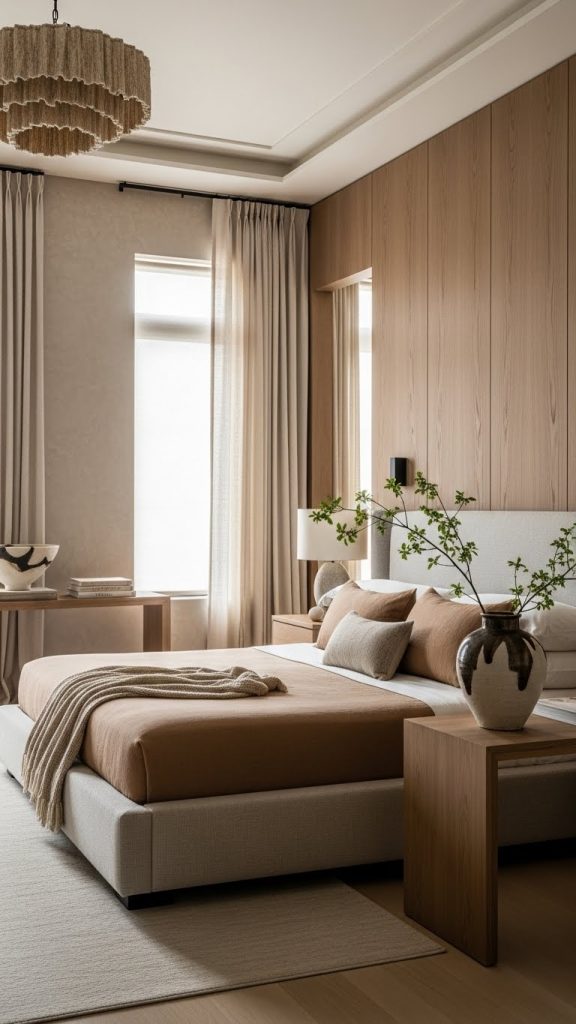
7. Concealed Storage for Visual Silence
Clutter is the enemy of luxury. Storage in a luxury bedroom must exist, but it should not be visible.
Built-in wardrobes, hidden drawers, and seamless cabinetry maintain visual calm. Handles are minimized or integrated. Lines remain uninterrupted.
Surfaces are kept clear. What is visible feels deliberate rather than necessary.
This design principle allows the bedroom to function efficiently without sacrificing serenity.
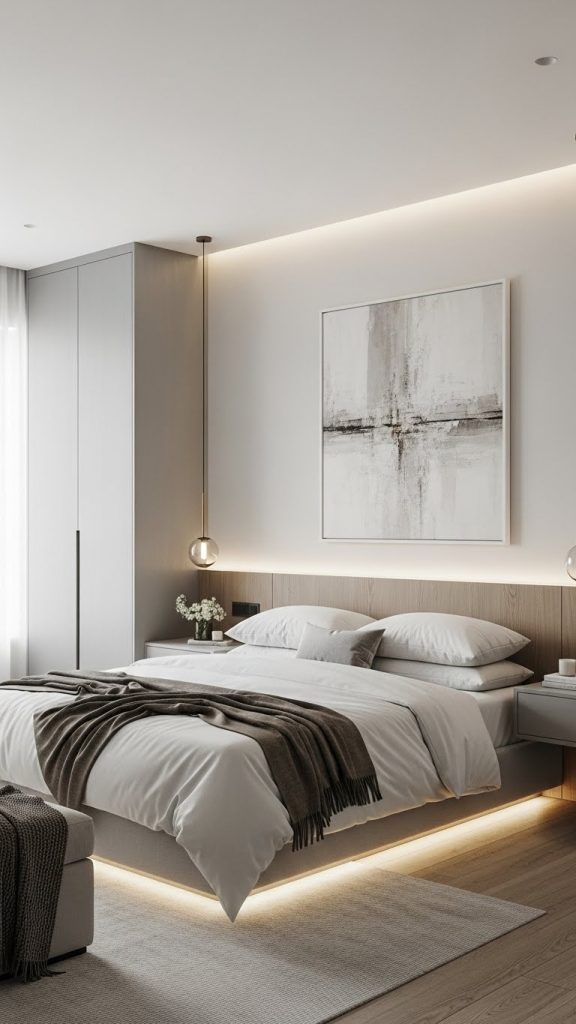
8. Wall Treatments That Add Depth Without Noise
Luxury bedroom walls do not shout. They whisper.
Textured plaster, upholstered panels, wood slats, or subtle wallcoverings add depth without visual distraction. Accent walls are calm and material-driven rather than color-driven.
Artwork, if present, is minimal and carefully chosen — often one large piece rather than many small ones.
Walls support the atmosphere rather than compete with it.
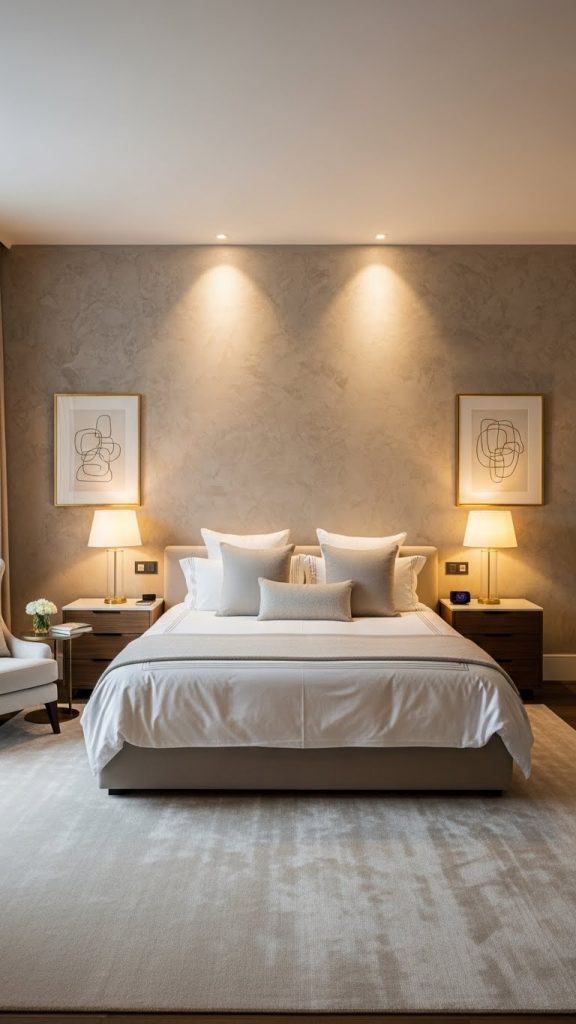
9. Window Treatments That Frame Light
Natural light is one of the most luxurious elements available, and luxury bedrooms treat it with respect.
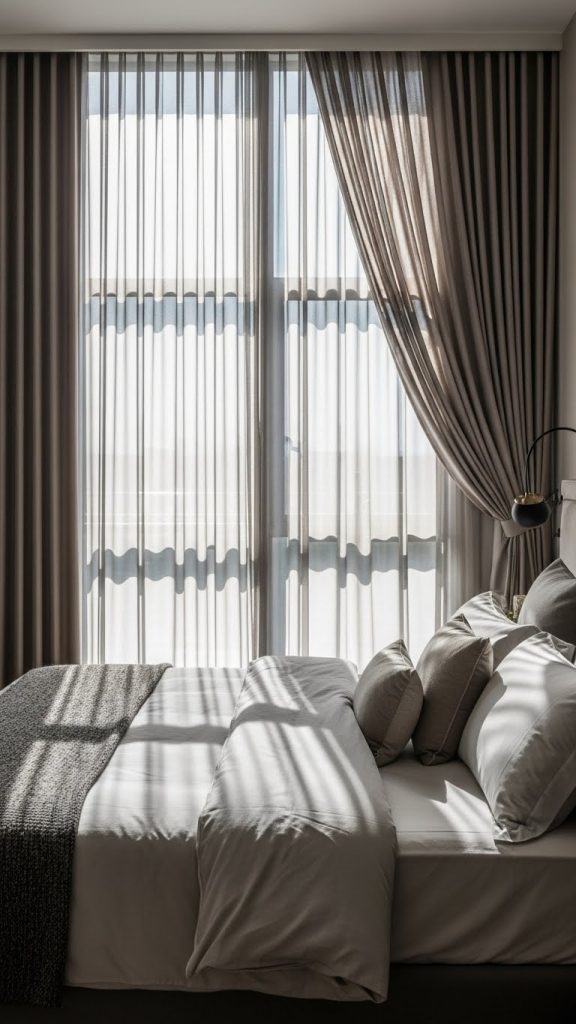
Floor-to-ceiling curtains elongate walls and soften daylight. Fabrics are chosen for movement and texture rather than opacity alone. Sheers filter light gently, while heavier layers provide privacy and darkness when needed.
Curtains are generous in width, creating fullness even when open. This enhances elegance and softness.
The window becomes a framed experience rather than a functional opening.
10. Personal Restraint as the Final Luxury
Perhaps the most defining element of a luxury bedroom is what isn’t there.
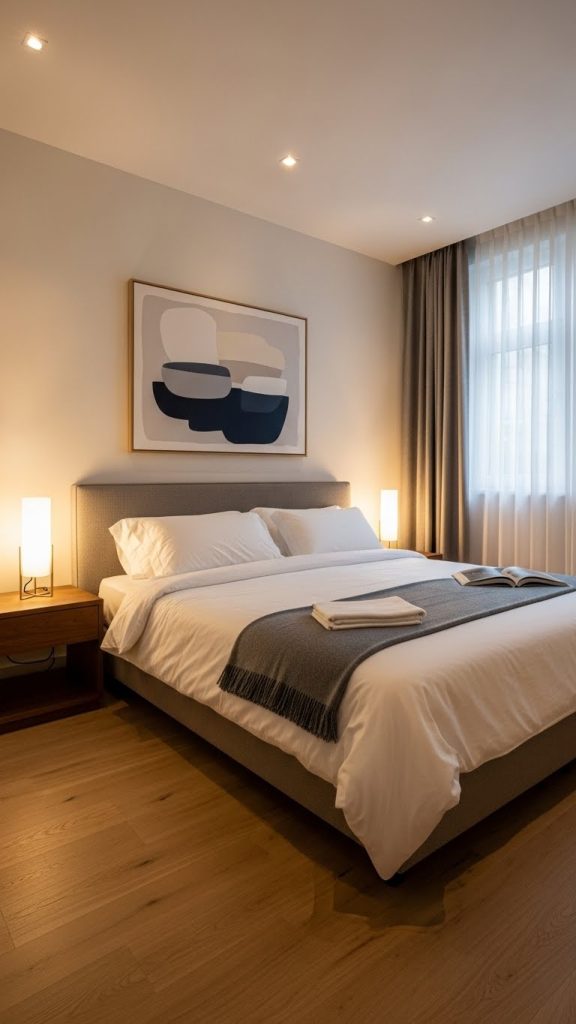
Luxury bedrooms avoid excessive personal display. Instead of many objects, a few meaningful items are placed intentionally — a book, a sculpture, a photograph.
This restraint preserves calm. The room reflects identity without performance.
The result is a bedroom that feels private, protected, and emotionally clear.
Conclusion: Luxury as Quiet Mastery
A luxury bedroom does not announce itself. It reveals itself slowly — through comfort, silence, and emotional ease.
True luxury is not about expense, trend, or scale. It is about mastery: of proportion, of light, of material, and of restraint. It is about creating a space that supports rest rather than distracts from it.
The most successful luxury bedrooms feel inevitable, as though nothing could be added or removed without diminishing the whole. They allow the occupant to breathe, to slow down, and to feel held by the space.
In the end, luxury in the bedroom is not about living grandly.
It is about resting deeply — and waking well.

Visual inspiration, practical ideas and editorial stories for everyday living.
Leave a Comment