10 Clay Animal Craft Ideas
Clay crafting has been a beloved art form for centuries, crossing cultures, ages, and artistic styles. From ancient ceramic animal figurines found in archaeological sites to modern handmade charms and sculptures, animals have always been one of the most inspiring subjects for clay artists. There is something deeply satisfying about shaping a living creature from a soft, moldable material using nothing but your hands and imagination.
Animal clay crafts are especially popular because they combine creativity with emotional expression. Animals carry personality, symbolism, and movement, which makes them perfect subjects for both beginners and experienced artists. Whether you are working with air-dry clay, polymer clay, or traditional ceramic clay, animal designs allow endless experimentation with texture, posture, and storytelling.
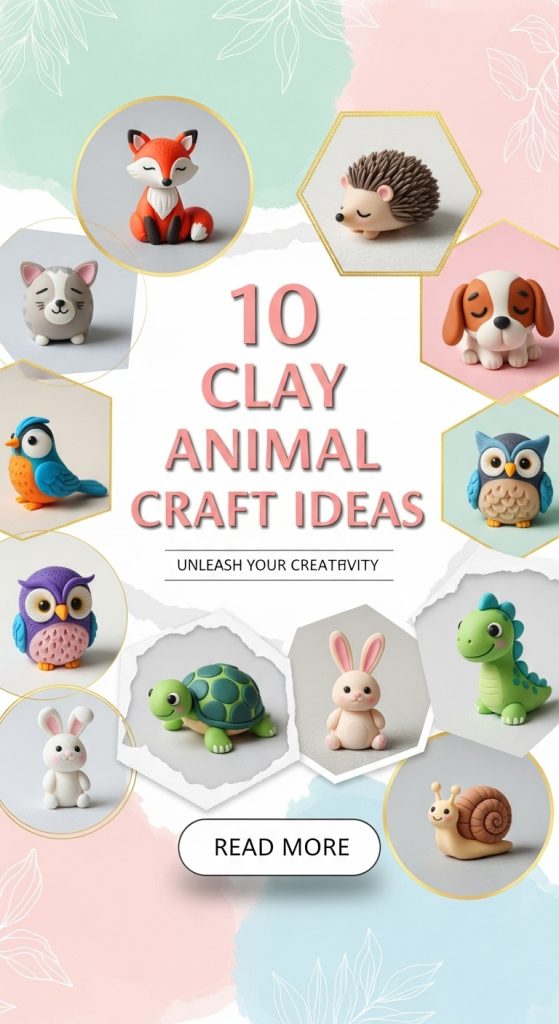
Another reason animal clay crafts are so appealing is their versatility. They can be cute or realistic, tiny or large, decorative or functional. A clay animal can become a figurine, a keychain, a planter, a pen holder, or even a teaching tool for children. For beginners, animals offer simple shapes to practice basic techniques. For advanced artists, they provide opportunities to refine anatomy, proportion, and surface detailing.
This guide presents 10 detailed clay animal craft ideas, each chosen for its creative potential and adaptability. These ideas are not just quick projects; they are concepts you can expand, customize, and revisit as your skills grow. Whether you’re crafting for fun, selling handmade items, teaching a class, or building a portfolio, these animal ideas will give you strong foundations and plenty of inspiration.
1. Clay Turtle with Textured Shell
The turtle is one of the most beginner-friendly yet visually rich animals to sculpt in clay. Its body is built from simple forms, while the shell allows creative freedom with patterns and textures.
Start by forming the base of the turtle using an oval shape for the body and a dome for the shell. The head, legs, and tail can be rolled into short cylinders. Because turtles move slowly and close to the ground, minor imperfections often add charm rather than detract from realism.
The real magic lies in the shell. You can carve geometric patterns, hexagonal plates, spirals, or organic cracks into the surface using simple tools like toothpicks or sculpting needles. For a more stylized look, exaggerate the shell segments and round their edges. For a realistic turtle, keep the pattern subtle and uneven.
Turtles are excellent for experimenting with textures. You can press fabric, mesh, or even leaves into the clay to create natural surface details. Once dry or baked, the turtle can be painted in earthy tones, bright fantasy colors, or left natural for a minimalist look.
This craft works well as a desk figurine, garden ornament, or paperweight. Smaller versions can be turned into charms or magnets, while larger ones make great statement pieces.

2. Clay Owl Figurine
Owls are iconic animals that symbolize wisdom, mystery, and calm. Their upright posture and expressive faces make them perfect for clay crafting.
Begin by shaping a teardrop or egg shape for the owl’s body. The head can be blended into the body or added as a separate rounded form. One of the defining features of an owl is its large eyes, which can be created using small clay balls or shallow indentations.
Feathers are an important detail but don’t need to be overly complex. Simple repeated lines, dots, or scalloped patterns can suggest feather layers without overwhelming the piece. For stylized owls, focus on symmetry and clean shapes. For more realistic designs, vary the feather sizes and directions.
Owls allow a wide range of emotional expressions. Slightly tilted heads can create curiosity, wide eyes suggest alertness, and closed eyes give a peaceful, sleepy look. Small details like tiny beaks and subtle brow ridges add personality.
This craft is ideal for home décor, especially shelves and windowsills. Seasonal variations work beautifully too—winter owls, forest owls, or even fantasy-themed owls with exaggerated features.

3. Clay Cat in Sitting Pose
Cats are one of the most expressive animals you can sculpt, making them a favorite subject for artists. A sitting cat pose is especially effective because it balances simplicity with elegance.
Start with a rounded base for the body and a smaller sphere for the head. The tail can be wrapped around the feet or curled behind the body to help stabilize the figure. Ears are formed using small triangular shapes gently blended into the head.
The key to a successful clay cat is posture. A straight spine gives a regal look, while a slightly hunched body creates a relaxed, domestic feel. Small adjustments to the head tilt can completely change the mood of the piece.
Facial features should be subtle. Tiny nose triangles, soft eye shapes, and minimal mouth lines work better than overly detailed expressions. Whisker marks can be carved lightly or added later with paint.
Clay cats can be personalized easily. You can recreate real pets by adjusting ear size, tail length, and facial markings. This makes them popular as custom gifts. Cats also translate well into minimalist styles, making them perfect for modern décor.

4. Clay Elephant with Raised Trunk
Elephants are powerful symbols of strength, memory, and luck. Sculpting an elephant in clay is a rewarding challenge that encourages attention to proportion and balance.
Begin with a large rounded body and a slightly smaller head. The legs should be thick and sturdy to support the weight visually. The trunk is the focal point of this craft and can be shaped as a curved cylinder extending upward or forward.
Ears are another defining feature. They can be large and flat or gently folded, depending on whether you want a stylized or realistic elephant. Thin the clay carefully for ears to prevent cracking, especially with air-dry clay.
Texture is essential for elephants. Use gentle lines, stippling, or sponge impressions to create the look of wrinkled skin. Avoid making patterns too uniform, as natural skin is irregular.
Elephants work beautifully as symbolic pieces, often gifted for good luck or prosperity. They can also be adapted into functional crafts like ring holders, incense holders, or small planters.

5. Clay Penguin Family Set
Penguins are naturally charming animals, making them ideal for playful clay projects. Creating a penguin family set adds storytelling and emotional warmth to your craft.
Each penguin can be made using a simple oval body shape with a smaller head or integrated form. Flippers are flat teardrop shapes attached to the sides, while feet are small and wide for stability.
What makes this idea special is variation in size. A larger adult penguin paired with smaller chicks instantly creates a narrative. You can adjust posture and head angles to suggest interaction, such as leaning together or looking up.
Penguins are perfect for experimenting with color blocking. Their black-and-white bodies are easy to paint, while small color accents like orange beaks or rosy cheeks add personality.
This set works wonderfully as a winter or holiday decoration, a nursery piece, or a gift symbolizing family and togetherness.

6. Clay Fox with Curled Tail
Foxes are elegant, clever animals that lend themselves beautifully to clay sculpture. Their sleek bodies and expressive tails offer a great opportunity to practice flow and movement.
Start with a slender body shape and elongated head. The snout should taper gently rather than ending abruptly. Legs can be simplified into short supports to maintain balance.
The tail is the highlight of this craft. A large, flowing tail curled around the body adds both stability and visual interest. You can texture the tail with soft lines or layered impressions to suggest fur.
Foxes look striking in both realistic and stylized designs. Bright orange, red, or even fantasy colors like blue or white can be used. Minimal facial features often work best, allowing the silhouette to speak for itself.
Clay foxes make excellent decorative figurines and are popular in woodland-themed collections.

7. Clay Frog on a Leaf
Frogs are playful, compact, and perfect for clay crafting. Pairing a frog with a leaf base adds context and turns a simple sculpture into a complete scene.
The frog’s body can be made from a squat oval shape, with large rounded eyes placed high on the head. Legs are bent and tucked close, giving the frog its characteristic posture.
The leaf base can be shaped separately and textured with veins using a sculpting tool. This base not only enhances the design but also improves stability.
Frogs allow exaggerated features, making them fun and expressive. You can create smiling frogs, sleepy frogs, or even fantasy versions with crowns or accessories.
This craft works well as a garden decoration, desk ornament, or whimsical gift.
8. Clay Horse Head Sculpture
A horse head sculpture is a more advanced clay project that focuses on anatomy and expression rather than full-body construction.
Start with a solid base shape for the head, gradually refining the muzzle, jaw, and forehead. Pay attention to proportions, as small changes can significantly affect realism.
The mane can be stylized with flowing lines or sculpted in layered strands. You can choose a smooth, polished finish or a textured, expressive surface.
This project is excellent for artists looking to improve sculptural skills and create a display-worthy piece. Horse heads are often used as wall décor, bookends, or standalone art sculptures.

9. Clay Bear Holding an Object
Bears are versatile animals that can be cute, strong, or gentle depending on design. A bear holding an object adds charm and narrative to the sculpture.
The bear’s body is typically round and sturdy, with short limbs. The head can be large to emphasize cuteness, especially for cartoon-style bears.
The object—such as a heart, fish, honey pot, or star—can be sculpted separately and placed in the bear’s arms. This makes the piece ideal for themed gifts like Valentine’s Day or birthdays.
Bears work well with soft textures and rounded edges. Simple facial features help maintain a friendly appearance.

10. Clay Snail with Decorative Shell
Snails are underrated but fantastic clay subjects. Their slow nature and spiral shells make them both relaxing and visually interesting to sculpt.
The snail’s body is a simple elongated shape with a slightly raised head. The shell is a coiled spiral that can be smooth or heavily decorated.
Shells allow endless creativity. You can add patterns, dots, flowers, or even miniature scenes. Fantasy snails with colorful shells are especially popular.
Snails are perfect for beginners and advanced artists alike. They can be whimsical, realistic, or abstract, and they fit well in garden-themed collections.

Conclusion
Clay animal crafts are more than just decorative objects; they are small sculptures filled with personality, emotion, and creativity. Each animal offers its own challenges and rewards, from simple beginner projects like turtles and snails to more advanced designs like horse heads and elephants.
What makes these crafts truly special is their adaptability. You can scale them up or down, simplify or refine details, and personalize them to tell your own stories. Over time, revisiting the same animal with improved skills can become a meaningful way to track artistic growth.
Whether you’re crafting for relaxation, teaching others, or building a handmade brand, animal clay crafts provide an endless source of inspiration. With patience, curiosity, and a willingness to experiment, even a small piece of clay can come to life in your hands.
