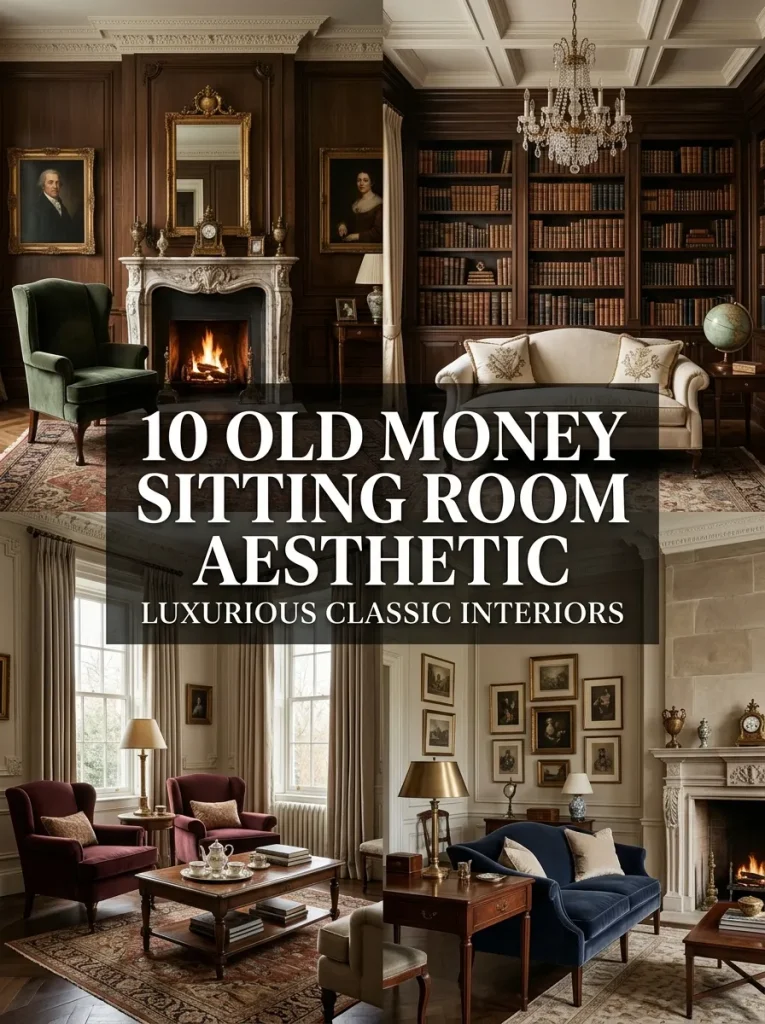
10 Old Money Sitting Room Aesthetic

The old money sitting room is not designed to be noticed quickly. It does not seduce at first glance, nor does it rely on spectacle, novelty, or excess to assert its value. Instead, it reveals itself slowly, often imperceptibly, to those who know how to look. These rooms are built on the assumption that wealth does not need explanation. They are spaces shaped by inheritance rather than acquisition, continuity rather than consumption.

Historically, the sitting room occupied a specific role in affluent households. It was neither ceremonial nor purely private. Unlike the grand drawing room, it did not exist to impress guests, and unlike the bedroom or study, it was not a retreat from social life. The sitting room was a place of daily ritual: reading, quiet conversation, correspondence, reflection. Its furnishings were chosen for longevity and comfort, not fashion cycles. Its decor evolved gradually, absorbing decades of use, taste, and memory.

What distinguishes old money interiors from modern luxury is their relationship to time. Modern wealth often compresses status into immediacy: bold statements, visible expense, rapid transformation. Old money, by contrast, stretches meaning across generations. Objects are not replaced when trends shift; they are repaired, reupholstered, inherited. Wear is not considered damage but proof of legitimacy.

This essay explores ten distinct old money sitting room aesthetics drawn from different cultural and historical lineages. Each reflects a specific way wealth has learned to inhabit space — quietly, confidently, and without urgency. These are not prescriptive styles, but enduring atmospheres that transcend decoration.

1. English Country House Restraint

The English country house sitting room embodies the essence of old money sensibility. It is layered rather than curated, inherited rather than designed. Nothing matches perfectly, yet everything belongs.

Walls are often painted in muted heritage tones — soft sage, stone beige, weathered blue — or covered in faded floral wallpaper that has long outlived its original trend. Furniture is substantial but forgiving: deep sofas upholstered in chintz or tweed, wingback chairs with softened arms, wooden tables bearing the marks of decades of use.

The room prioritizes comfort over visual precision. Cushions are plentiful but mismatched. Books are stacked horizontally and vertically, never styled for symmetry. Lamps cast a warm, low glow through fabric shades slightly yellowed by time.

Fireplaces anchor the space, whether in use or not. Rugs overlap. Curtains hang generously, often pooling slightly on the floor. Nothing feels delicate. The room suggests long winters, inherited estates, and the quiet authority of landownership.


2. American East Coast Legacy (The Old Guard Aesthetic)

Old money sitting rooms along the American East Coast — particularly in historic urban centers and coastal enclaves — reflect a disciplined, intellectual interpretation of wealth. These spaces emphasize proportion, restraint, and tradition.

Walls are often painted in off-white, ivory, or pale gray, allowing architectural details such as crown molding and wainscoting to define the room. Furniture is elegant but conservative: rolled-arm sofas, straight-backed chairs, polished wood tables.

Symmetry plays a role, but it is never rigid. Seating arrangements encourage conversation rather than display. Bookshelves are central, filled with hardcovers accumulated over decades rather than curated by color.

Artwork tends toward portraits, maritime scenes, or landscapes — pieces chosen for lineage or sentiment rather than aesthetic experimentation. The atmosphere is measured and composed, suggesting wealth tied to institutions, education, and continuity rather than flamboyance.


3. French Aristocratic Salon Influence

The French old money sitting room leans intellectual and artistic rather than cozy. Historically, these spaces functioned as salons — environments designed for conversation, debate, and cultural exchange.

Walls are often paneled or plastered in pale neutrals: limestone white, antique gray, or muted cream. Ceilings are high, adorned with restrained moldings rather than ostentation. Furniture is elegant but light: upholstered chairs with carved frames, small writing desks, marble-topped tables.

Textiles are refined and understated — linen, silk, and wool in soft, desaturated tones. Art is essential but never overwhelming. Paintings, drawings, and sculptures appear casually placed, as though they have always occupied their positions.

Lighting is atmospheric rather than bright, favoring table lamps and wall sconces. This sitting room feels cultivated rather than indulgent, expressing inherited cultural capital more than material wealth.


4. Italian Patrician Minimalism

Italian old money interiors often feel austere to modern eyes, but this restraint is intentional. These sitting rooms rely on architecture rather than decoration to convey status.

Stone walls, arched windows, and high ceilings define the space. Furniture is sparse but monumental: a single large wooden table, a pair of carved chairs, a substantial rug anchoring the room.

Colors are drawn from the landscape — terracotta, limestone, olive, umber. Textiles are heavy and natural: wool, linen, raw silk. Walls may remain largely bare, punctuated by one significant artwork or religious object.

The room feels cool, dignified, and ancestral. It suggests wealth rooted in land, lineage, and civic authority rather than personal display.


5. Scandinavian Inherited Calm (Pre-Modernist)

Before modern Scandinavian design became synonymous with minimalism, Nordic old money interiors emphasized craftsmanship, light, and quiet solidity.

Sitting rooms are bright but subdued, with pale wood floors and neutral walls. Furniture is simple in form but impeccably made, often handcrafted and passed down through generations.

Textiles favor wool and linen in restrained tones. Decorative objects are few but meaningful: family portraits, ceramic vessels, woven throws. Every item serves a purpose.

The atmosphere is calm and reflective, shaped by long winters and an appreciation for moderation. Wealth is expressed through stability, quality, and continuity rather than abundance.


6. British Colonial Club Room

The colonial old money sitting room draws from gentlemen’s clubs and overseas estates. It is masculine, atmospheric, and enclosed.

Dark wood paneling lines the walls. Leather armchairs sit low and heavy. Persian or Oriental rugs ground the space. Colors are deep and saturated: oxblood, forest green, navy.

Lighting is intentionally low, favoring table lamps and shaded fixtures. Objects such as globes, maps, and travel artifacts appear not as souvenirs but as evidence of historical reach and mobility.

This room feels insulated from modernity. It conveys old money’s historical relationship with power, geography, and private space.


7. Mediterranean Old World Elegance

Mediterranean old money sitting rooms are shaped by climate as much as culture. Thick walls, stone floors, and open windows define the architecture.

Furniture is minimal but robust. Chairs and tables are built to last generations. Colors are sun-faded: chalk white, sand, muted blue. Textiles are handwoven and tactile.

Decoration is sparse. The room relies on proportion, light, and material rather than ornament. It feels timeless, cooled by tradition and sea air.

Wealth here is implied through land and architecture rather than possessions.


8. Central European Intellectual Bourgeoisie

In Central Europe, old money often merged aristocratic heritage with academic and cultural life. Sitting rooms reflect this blend of seriousness and refinement.

Dark wood furniture dominates the space. Upholstery leans toward velvet and wool. Rugs are patterned and substantial. Bookshelves line the walls, filled densely and unapologetically.

Lighting is warm but subdued, creating an introspective atmosphere. Artwork often includes classical prints, portraits, or historical scenes.

The room feels scholarly and slightly melancholic, expressing wealth tied to education, philosophy, and civic institutions.


9. Southern European Catholic Grandeur

In Southern Europe, old money sitting rooms often intertwine wealth with religious tradition. These spaces feel reverent rather than extravagant.

Furniture may be ornate but aged. Fabrics are rich — velvet, brocade, heavy linen — in deep colors such as burgundy, gold, and navy. Religious iconography appears naturally rather than as statement decor.

The room communicates continuity, faith, and lineage. Wealth is inseparable from ritual and history.


10. The Academic Collector’s Sitting Room

The final old money aesthetic centers on knowledge as inheritance. This sitting room is dense with books, art, and objects collected over a lifetime.

Nothing matches perfectly. Objects coexist organically. The room feels personal, layered, and intellectually alive.

It represents old money at its most individual — wealth expressed through curiosity, memory, and lifelong engagement with the world.


Conclusion: Old Money Is a Relationship With Time

The old money sitting room is not a style to be purchased or replicated quickly. It is a relationship with time — slow, deliberate, and confident. These rooms assume permanence. They resist urgency. They are built to last materially, culturally, and emotionally.

In a world obsessed with novelty and visibility, the old money sitting room offers a different definition of luxury: not what is seen, but what endures.

Similar Posts

  • 10 Rope Shelf Ideas

    Rope shelves have become one of the most versatile and charming additions in modern home decor. They combine natural materials, handcrafted creativity, and functional storage in ways that suit nearly every design aesthetic. With their lightweight construction and endless customization options, rope shelves bring a sense of ease and warmth to any room. At the…

  • 10 DIY Candle Ideas

    Candles have always held a special place in home decor. Their gentle glow softens a room, their fragrance transforms the atmosphere, and their presence brings comfort, warmth, and serenity. A candle can turn a regular evening into a peaceful escape, a bedroom into a sanctuary, or a bathroom into a relaxing spa-like retreat. What makes…

  • 10 Rustic Table Settings with Natural Elements

    Rustic table settings are characterized by their use of natural materials, earthy tones, and simple, organic design. Incorporating natural elements like wood, stone, greenery, and fresh flowers can create a warm and inviting atmosphere for both everyday meals and special occasions. Rustic decor emphasizes authenticity, texture, and a connection to nature, making every meal feel…

  • 10 Small Bathrooms with Showers

    Designing a small bathroom that includes a shower requires thinking beyond basic functionality. Limited square footage means every inch matters, and the right choices in layout, materials, lighting, and storage can transform even the tiniest bathroom into a space that feels polished, practical, and visually expansive. Small bathrooms can be just as sophisticated as large…

  • 10 Colorful Kids Room Ideas

    A colorful kids room is more than just a bright and cheerful space. It is a world created for imagination, curiosity, and comfort. Color plays an important role in how children learn, express themselves, and feel inside their environment. Whether you choose bold tones, pastel shades, rainbow themes, or creative mixes of patterns and prints,…

  • 10 Unique Engagement Shoot Ideas

    An engagement shoot is a memorable opportunity to capture the love, personality, and story of a couple. While traditional photo sessions often focus on natural landscapes or classic backdrops, unique engagement shoots allow couples to express creativity, individuality, and shared experiences. By thinking beyond conventional locations and poses, photographers can capture authentic moments that reflect…