Roses have been bound to the language of love for centuries, yet their power has never come from novelty. It comes from recognition. A rose bouquet on Valentine’s Day is not a surprise — it is an affirmation. It says, I chose something that has always meant love, because what I feel is not fleeting.
Unlike many Valentine’s symbols that shift with trends, roses endure. Their meaning is layered: beauty and vulnerability, passion and patience, fragility and resilience. A rose blooms slowly, opens deliberately, and fades with dignity. This natural rhythm mirrors romantic experience itself.
What often diminishes the rose’s emotional power is excess — oversized bouquets stripped of intention, color palettes chosen for spectacle rather than meaning. A truly memorable Valentine’s rose bouquet is not defined by size or cost, but by coherence. Color, number, texture, and presentation work together to tell a story.
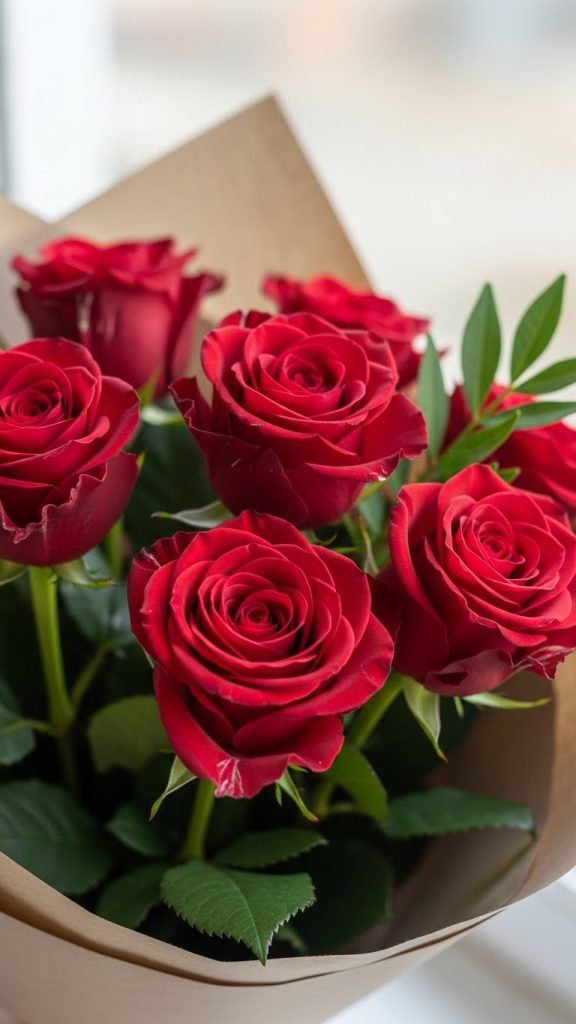
This essay explores ten Valentine’s rose bouquet ideas, each grounded in symbolism rather than trend. These bouquets are not formulas to be copied, but emotional frameworks — ways of using roses to communicate love with clarity, restraint, and depth.
1. The Classic Red Rose Bouquet, Refined
The red rose bouquet is the most iconic Valentine gesture, yet its impact depends entirely on execution. When refined, it becomes timeless rather than predictable.
This bouquet favors fewer roses rather than abundance. Each bloom is allowed space to be seen and appreciated. The red is deep — crimson or wine-toned rather than bright scarlet — signaling passion tempered by maturity.
Greenery is minimal, chosen for softness rather than volume. Stems remain long and natural, and the bouquet is loosely gathered rather than tightly bound. Wrapping is understated: kraft paper, linen, or no wrap at all.
This bouquet expresses love as devotion — strong, confident, and unembellished.